LLMs Make Agents Feasible
Evolution of Agentic Systems
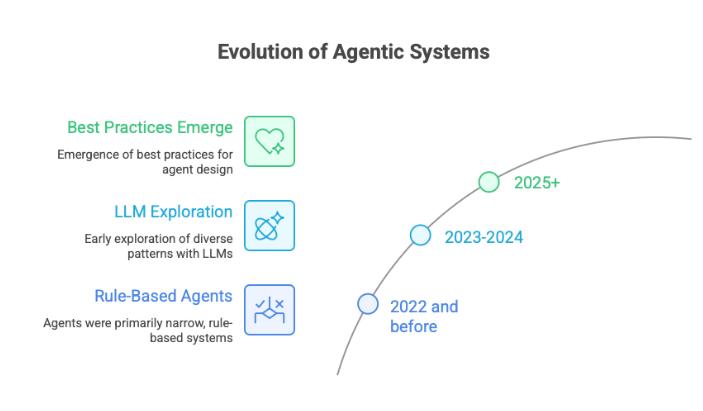
- 2022 and before: Agents were primarily narrow, rule-based systems
- 2023 – 2024: Early exploration of diverse patterns with LLMs
- 2025+: Emergence of best practices for agent design
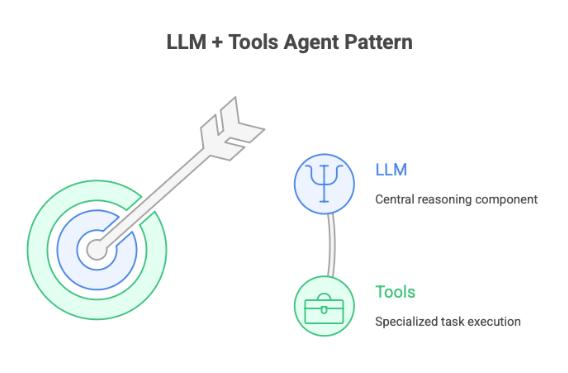
The most adopted pattern: LLM + Tools
Agent Capability Levels
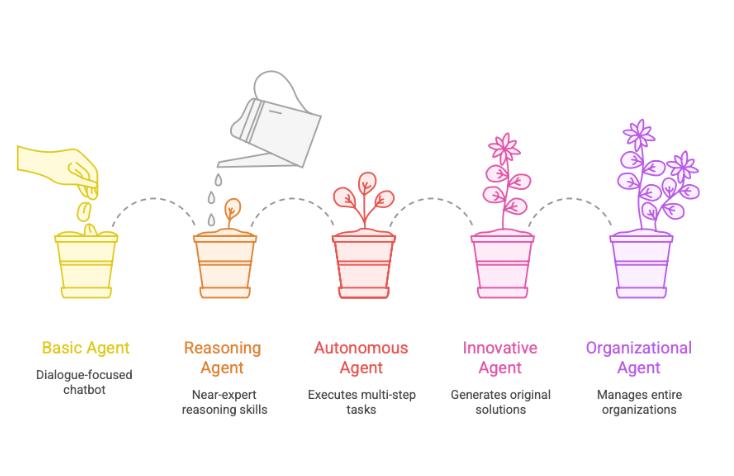
Level 1
Agent that excels at dialogue — similar to today's chatbots.
Level 2
Agent that reasons with near-expert proficiency. [We're here]
Level 3
Agent that autonomously executes multi-step tasks. [Soon]
Level 4
Agent innovators that generate and contribute original solutions.
Level 5
Agent organizers that can manage entire organizations.
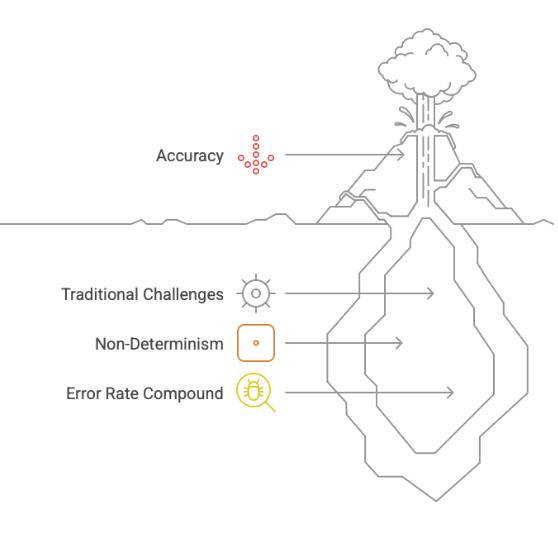
Agents are feasible but not yet practical
All traditional challenges from prototype to production still apply. The unique challenge is accuracy. LLMs are natively non-deterministic, and the error rates compound.
Lessons for Making Agentic Systems Practical
Keep It Simple
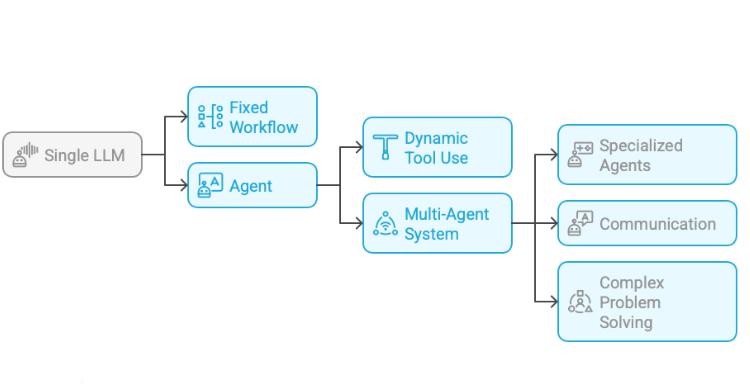
- Single LLM: One AI model working alone on tasks. Sufficient for most problems with prompt engineering.
- Workflow: Fixed paths of LLM operations defined by developers. Provides deterministic behavior, predictable execution paths, and maximum control.
- Agent: LLM that directs its own process and uses tools dynamically. Best for complex, dynamic tasks needing autonomy and tool usage.
- Multi-Agent: Multiple specialized AI agents working together and communicating to solve highly complex, distributed problems needing specialized agents.
Keep It AI-Native
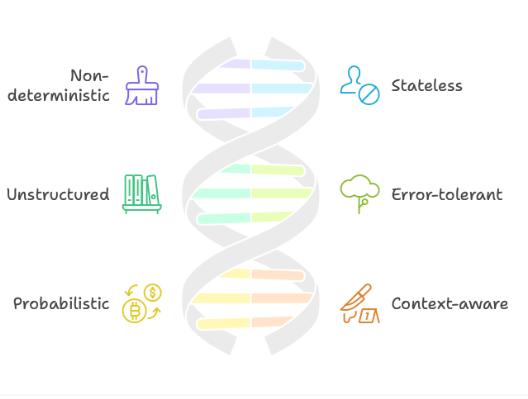
- Non-deterministic: Generates variable outputs for the same input; variability is a strength that enables creativity and diversity.
- Stateless: Operates without depending on stored memory of prior interactions, preventing unnecessary complexity from stateful dependencies.
- Unstructured: Natively processes natural language and unstructured data, avoiding rigid schemas or predefined formats.
- Error-tolerant: Recognizes errors as inevitable, logs them, and recovers gracefully rather than aiming for complete elimination.
- Probabilistic: Works on likelihoods, providing confidence levels instead of absolutes; evaluation and feedback loops drive improvement.
- Context-aware: Interprets situational context to deliver tailored responses; effective context engineering is critical for performance.